Aluminum foil woven fabric is a reinforced composite material that combines the reflective and barrier properties of aluminum foil with the mechanical strength of woven fabric. By bonding a metallic facing to a woven substrate, this material provides a practical balance of heat reflection, tear resistance, moisture protection, and flexibility.
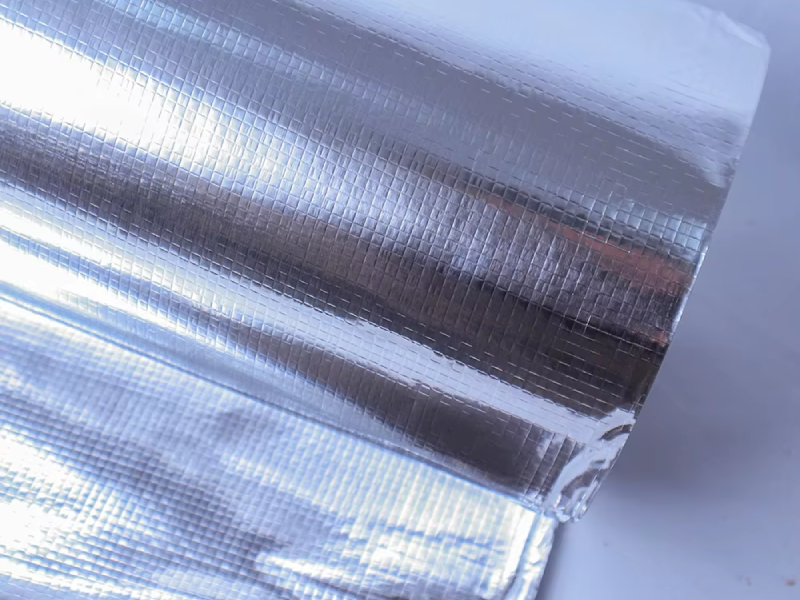
Unlike conventional aluminum foil, which can be easily damaged under repeated handling or mechanical stress, aluminum foil woven fabric benefits from the reinforcement of a woven structure. This makes it suitable for applications requiring both surface protection and structural durability, including building insulation, industrial packaging, HVAC systems, and protective covers.
As manufacturers develop more specialized composite materials, aluminum foil woven fabric has become an important option for applications where lightweight construction, reflective performance, and mechanical reinforcement are required.
Aluminum foil woven fabric is a multilayer composite material typically manufactured by laminating aluminum foil onto a woven fabric substrate. The aluminum foil provides a reflective surface and an effective barrier against moisture, light, and other external factors, while the woven fabric contributes tensile strength, tear resistance, and dimensional stability.
Depending on the intended application, the woven substrate may be made from polypropylene (PP) or polyethylene (PE). Additional polyethylene layers or bonding materials can be incorporated to improve adhesion, flexibility, and moisture resistance.
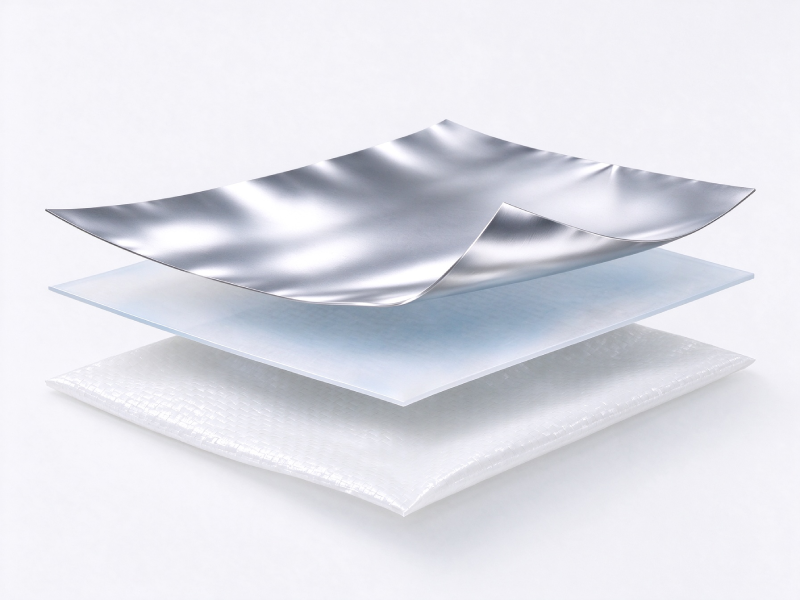
A typical aluminum foil woven fabric construction consists of:
● Aluminum Foil Layer: Provides a metallic reflective surface and barrier protection.
● Bonding or PE Layer: Connects the aluminum foil to the woven substrate and helps improve laminate integrity.
● Woven Fabric Layer: Reinforces the composite, improving tensile strength and resistance to tearing.
The manufacturing process involves preparing the woven substrate, bonding the aluminum foil, and controlling the final laminate quality. The selected lamination method has a direct influence on adhesion, flexibility, surface consistency, and long-term performance.
The process begins with woven fabric produced from PP or PE yarns. During weaving, warp and weft yarns are interlaced to create a stable fabric structure.
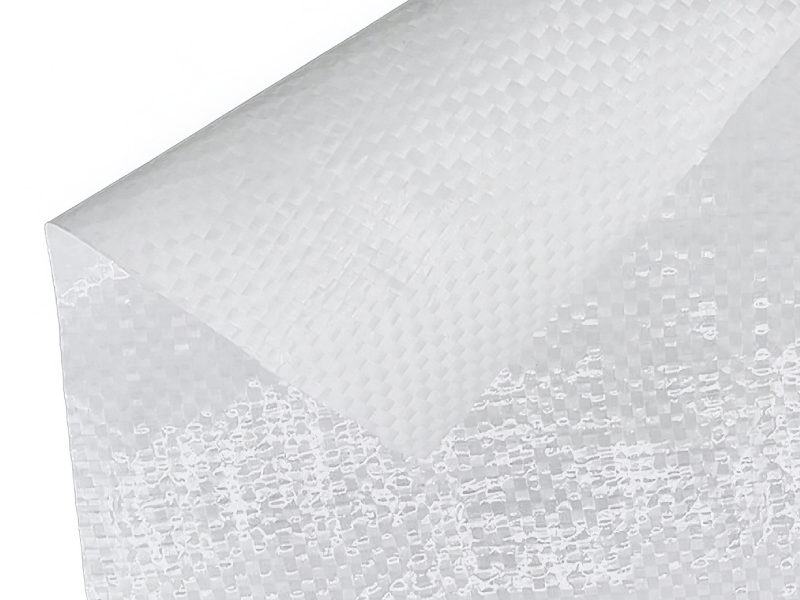
The aluminum foil is bonded to the woven substrate using a suitable lamination process.
In extrusion lamination, molten polyethylene is applied between the aluminum foil and woven fabric. The materials are then combined under controlled pressure and cooling conditions to form a continuous composite structure.
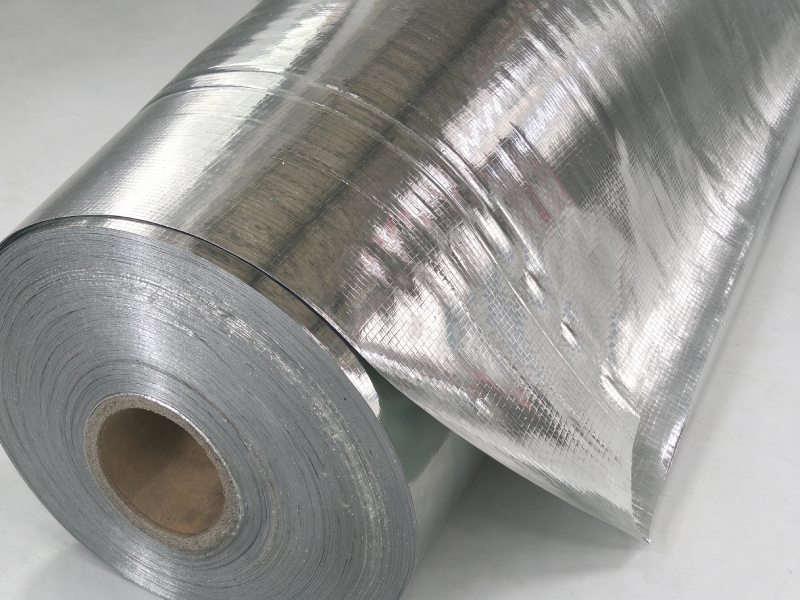
The main advantage of aluminum foil woven fabric is the combination of metallic barrier performance and woven reinforcement. Its suitability for a particular application depends on the material construction, foil thickness, fabric weight, and lamination quality.
The aluminum foil surface reflects a significant proportion of incident radiant heat when properly installed and exposed toward an appropriate air space. This makes aluminum foil woven fabric useful in reflective insulation systems for roofs, walls, and industrial enclosures.
The woven fabric substrate provides mechanical reinforcement that helps the laminate withstand handling, installation, and mechanical stress.
Aluminum foil can provide an effective barrier against moisture and water vapor when the foil layer is continuous and free from pinholes or damage.
Despite its reinforced structure, aluminum foil woven fabric can remain relatively lightweight and flexible. It can be supplied in rolls, cut to size, and incorporated into different insulation or packaging assemblies.
The woven substrate helps protect the foil layer against handling-related damage, while the laminated construction provides a more stable composite than unsupported foil.
Aluminum foil woven fabric is used in various industrial sectors because it combines a reflective metallic surface with a mechanically reinforced backing.
In building applications, aluminum foil woven fabric can serve as a reflective facing or protective layer in roof, wall, and ceiling insulation systems.
Its reflective surface helps reduce radiant heat transfer when installed with a suitable air space. The woven backing improves handling strength and helps the material maintain its integrity during installation.
HVAC systems often require insulation materials that help control heat transfer and protect duct surfaces.
Aluminum foil woven fabric can be used as an outer facing for duct insulation materials, providing a reflective surface and additional mechanical reinforcement. Its laminated structure can also help limit moisture penetration when properly specified and installed.
Industrial equipment, machinery, and processing facilities may require protective coverings against dust, moisture, and environmental exposure.
Aluminum foil woven fabric can be converted into flexible covers, insulation facings, and protective wraps. The woven reinforcement provides better handling durability, while the aluminum foil surface offers reflective and barrier properties.
In industrial packaging, aluminum foil woven fabric can be used for protective covers, equipment wrapping, and packaging systems that require a combination of mechanical strength and barrier protection.
For storage and transportation applications, aluminum foil woven fabric can be incorporated into protective liners and covering materials.
Selecting the right aluminum foil woven fabric requires evaluating both the facing material and the reinforced substrate. Buyers should consider the following specifications before placing an order.
Aluminum Foil Thickness
Foil thickness influences barrier performance, flexibility, and resistance to mechanical damage. The appropriate thickness depends on the required application and the expected handling conditions.
Woven Fabric Material and Weight
PP and PE woven fabrics offer different material characteristics. Fabric weight, yarn density, and weaving construction influence tensile strength, tear resistance, and overall laminate weight.
Total Thickness and Basis Weight
Total laminate thickness and basis weight are important for determining material handling characteristics, structural requirements, and compatibility with downstream converting processes.
Lamination Method and Bonding Strength
The bonding method affects the integrity of the composite structure. Buyers should evaluate adhesion consistency and resistance to delamination, especially for products exposed to repeated handling or environmental changes.
Roll Width and Length
Available roll dimensions should match the requirements of the intended production process or installation project. Customized widths and lengths can help reduce material waste and improve processing efficiency.
Application-Specific Performance
Different applications require different performance priorities. Reflective insulation may emphasize surface reflectivity and installation conditions, while industrial protective covers may require greater tensile strength, tear resistance, and weather resistance.
Providing clear technical requirements to the manufacturer helps ensure that the selected laminate meets the intended application needs.
Choosing a suitable aluminum foil woven fabric involves more than selecting a reflective surface. The aluminum foil, woven substrate, bonding layer, and overall laminate construction must work together to meet the requirements of the final application.
Foilexpert specializes in composite film products and provides material solutions for industrial packaging, insulation, and protective applications. By considering the required barrier performance, mechanical strength, and converting conditions, the material construction can be tailored to different project requirements.
Customized solutions can be discussed in terms of:
● Facing Material: Aluminum foil or metallized PET film, depending on the required performance.
● Woven Substrate: PP or PE woven fabric with different fabric weights and constructions.
● Lamination Structure: Single-sided or double-sided composite configurations.
● Material Specifications: Customized thickness, width, roll length, and overall basis weight.
● End-Use Requirements: Reflective insulation, industrial packaging, protective covers, and other composite material applications.
Whether you need a reinforced foil laminate for insulation or a customized woven composite for industrial protection, selecting the right material structure is essential for consistent performance.
Explore our composite film products or contact Foilexpert to discuss your material requirements and customized solutions.
 0571-88778588
Company Name:Zhejiang Pengyuan New Material Co., Ltd.
Address:No.2-9 Anxi Road, Liangzhu Street, Hangzhou 311113, China
Email:info@pengyuangroup.com






 Tel
 WhatsApp
 Top